Author: im_admin

  • Refrigeration and HVAC Compressor Repair and Overhaul: Expert Guide

    Refrigeration and HVAC Compressor Repair and Overhaul: Expert Guide

    When a refrigeration or HVAC system starts losing cooling performance, making unusual noise, or consuming more power than usual, the compressor is often the first component that needs attention. Since the compressor is known as the “heart” of any HVAC or refrigeration system, even a small issue can affect the entire operation.
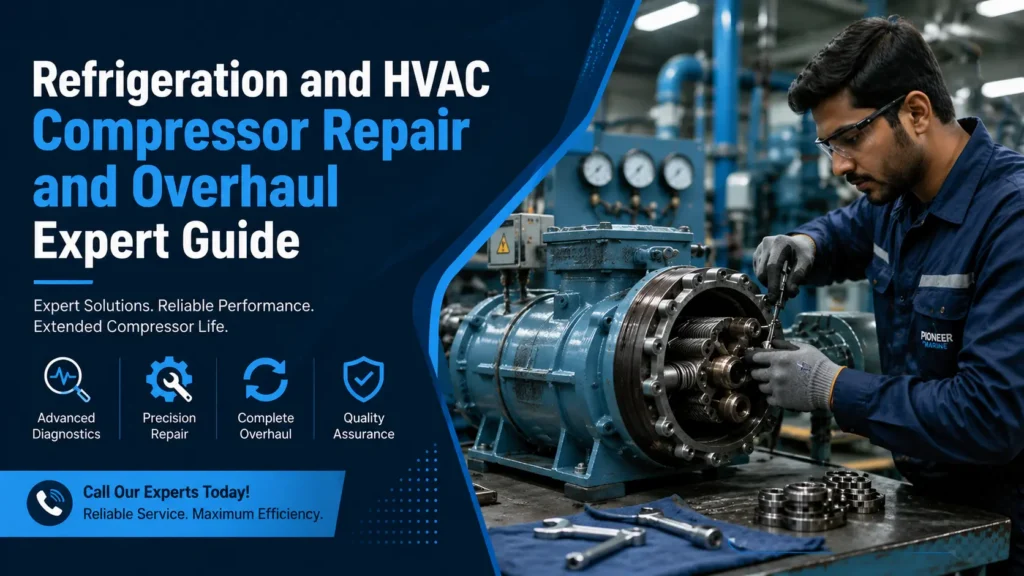
    Many businesses immediately think about replacing the compressor. But in reality, professional refrigeration and HVAC compressor repair and overhaul services can often restore system performance while saving time and cost.

    In this guide, we’ll explain how compressor diagnostics work, when repair is the better option, when replacement becomes necessary, and what happens during a complete overhaul process.

    Why Compressor Health Matters in HVAC Systems

    A compressor is responsible for circulating refrigerant throughout the system. Whether it’s a cold storage unit, industrial refrigeration setup, chiller plant, or commercial HVAC system, the compressor directly affects cooling efficiency and energy consumption.

    When compressor issues are ignored, businesses may face:

    • High electricity bills
    • Reduced cooling efficiency
    • Frequent breakdowns
    • Product spoilage in refrigeration systems
    • Unexpected downtime
    • Damage to connected HVAC components

    This is why timely refrigeration and HVAC compressor repair and overhaul services are important for maintaining long-term system reliability.

    Common Signs of Compressor Problems

    Most compressor failures do not happen overnight. Systems usually show warning signs before complete breakdown.

    Here are some common symptoms to watch for:

    1. Unusual Noise or Vibration

    Grinding, knocking, or rattling sounds may indicate internal wear, damaged bearings, or loose components.

    2. Reduced Cooling Performance

    If the system struggles to maintain temperature, compressor efficiency may be dropping.

    3. High Power Consumption

    A failing compressor often works harder than normal, increasing energy usage.

    4. Frequent Tripping

    Electrical overloads or overheating can cause repeated shutdowns.

    5. Oil Leakage

    Oil leaks around the compressor can point to seal damage or internal wear.

    6. Overheating

    Poor lubrication, blocked airflow, or refrigerant imbalance can lead to overheating issues.

    Early diagnostics can prevent small problems from turning into major repairs.

    Compressor Diagnostics: Finding the Real Problem

    Professional compressor diagnostics are the most important step before deciding on repair or replacement.

    An experienced HVAC service team will inspect multiple areas, including:

    • Suction and discharge pressure testing
    • Electrical testing and winding resistance checks
    • Refrigerant flow analysis
    • Oil quality inspection
    • Vibration analysis
    • Leak detection
    • Temperature monitoring
    • Performance efficiency testing

    Advanced diagnostic equipment helps technicians identify the root cause instead of simply treating symptoms.

    For example, low cooling may not always mean compressor failure. Sometimes the issue is related to refrigerant charge, blocked condensers, or electrical faults. Accurate diagnostics help businesses avoid unnecessary replacement costs.

    Compressor Repair vs Replacement: What’s the Better Choice?

    One of the biggest questions businesses ask is whether to repair the compressor or replace it completely.

    The answer depends on several factors.

    Repair Is Usually Recommended When:

    • Damage is minor or moderate
    • The compressor body is in good condition
    • Spare parts are available
    • The system is relatively modern
    • Downtime needs to be minimized
    • Repair cost is significantly lower than replacement

    Replacement May Be Better When:

    • Internal damage is severe
    • Multiple failures have already occurred
    • The compressor is outdated
    • Energy efficiency has dropped significantly
    • Repair costs are close to replacement costs

    A professional hvac service provider will always evaluate both technical and financial factors before suggesting the best solution.

    In many industrial and commercial systems, compressor overhaul can extend equipment life by several years at a much lower cost than buying a new unit.

    What Happens During a Compressor Overhaul?

    A compressor overhaul is a detailed restoration process where worn or damaged internal parts are repaired or replaced to bring the unit back to optimal performance.

    Here’s how the process typically works.

    Step 1: Complete Inspection

    The compressor is dismantled and all internal components are inspected carefully.

    Step 2: Cleaning and Surface Preparation

    Deposits, sludge, and contaminants are removed using industrial cleaning methods.

    Step 3: Replacement of Worn Parts

    Common replacement parts include:

    • Bearings
    • Pistons
    • Gaskets
    • Seals
    • Valves
    • Shafts
    • O-rings

    Step 4: Precision Machining

    Damaged surfaces are restored using advanced machining equipment to maintain exact tolerances.

    Step 5: Reassembly

    The compressor is reassembled according to manufacturer standards.

    Step 6: Testing and Quality Checks

    Performance testing ensures pressure stability, cooling efficiency, and safe operation before installation.

    A properly overhauled compressor can perform almost like a new unit when handled by experienced professionals.

    Technical Capabilities Required for Compressor Overhaul

    Not every repair workshop can handle industrial refrigeration and HVAC compressor repair and overhaul correctly.

    Professional facilities require:

    • Advanced diagnostic tools
    • Precision balancing equipment
    • Dynamic testing systems
    • CNC machining capability
    • Pressure testing systems
    • Refrigerant handling equipment
    • Skilled HVAC technicians and engineers

    Technical expertise is especially important for handling screw compressors, reciprocating compressors, centrifugal compressors, and semi-hermetic systems.

    Importance of Quality Standards in HVAC Service

    Quality standards play a major role in compressor reliability and safety.

    A trusted hvac service provider should follow:

    • Manufacturer repair guidelines
    • Industry-approved testing methods
    • Safety compliance procedures
    • Quality control inspections
    • Genuine spare part usage
    • Proper refrigerant handling standards

    Poor-quality repairs can lead to repeated failures, refrigerant leaks, and high operational costs.

    This is why businesses should always choose experienced professionals with proven technical capability.

    Benefits of Professional Compressor Repair and Overhaul

    Choosing expert compressor repair services offers several advantages:

    Lower Operational Cost

    Repair and overhaul are often more cost-effective than full replacement.

    Extended Equipment Life

    Proper restoration helps maximize the life of HVAC systems.

    Improved Energy Efficiency

    A repaired compressor can reduce unnecessary power consumption.

    Reduced Downtime

    Fast diagnostics and repair help businesses resume operations quickly.

    Better Cooling Performance

    Restored compressor efficiency improves system reliability and temperature control.

    Conclusion

    Compressor problems should never be ignored in refrigeration and HVAC systems. Early diagnostics, expert repair, and professional overhaul services can prevent major failures and help businesses save both time and money.

    Instead of immediately replacing the entire unit, a detailed inspection by an experienced hvac service team can reveal whether repair or overhaul is the smarter solution.

    With the right technical capabilities, advanced equipment, and strict quality standards, refrigeration and HVAC compressor repair and overhaul services can restore performance, improve efficiency, and extend the life of critical cooling systems.

  • Industrial AC Duct Cleaning and Repair: The Complete Guide

    Industrial AC Duct Cleaning and Repair: The Complete Guide

    A single leaking duct joint can waste up to 30% of an HVAC system’s conditioned air, and in most industrial facilities, nobody notices until energy bills spike or equipment fails. By that point, the damage is already done.
    Industrial duct cleaning and repair is not a routine housekeeping task. It is a critical maintenance function that directly affects energy costs, air quality, equipment lifespan, and in regulated industries, legal compliance.

    Whether you manage a manufacturing plant, a food processing facility, or a maritime vessel, this guide covers everything you need to know.

    What Is Industrial Duct Cleaning and Repair?

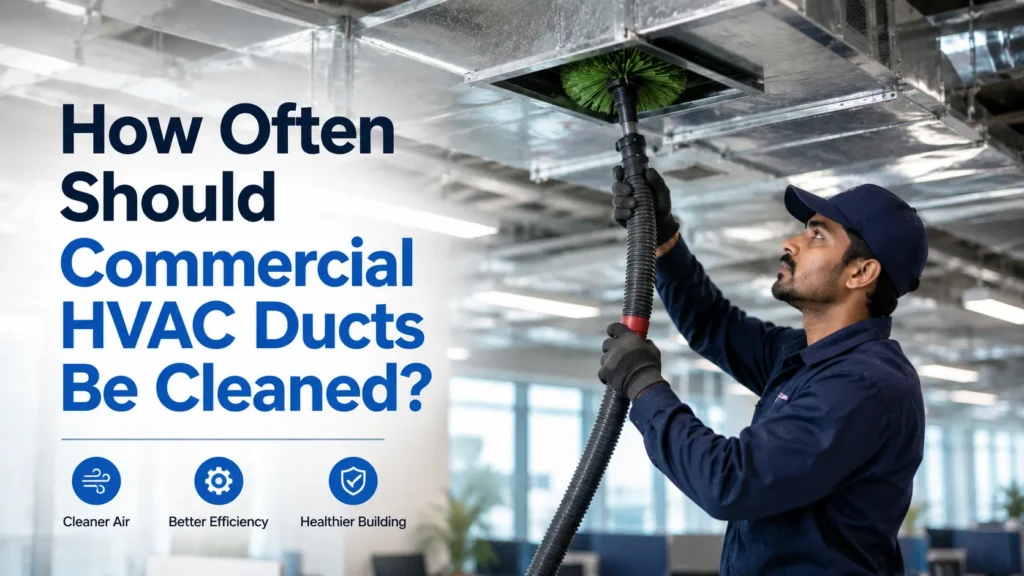
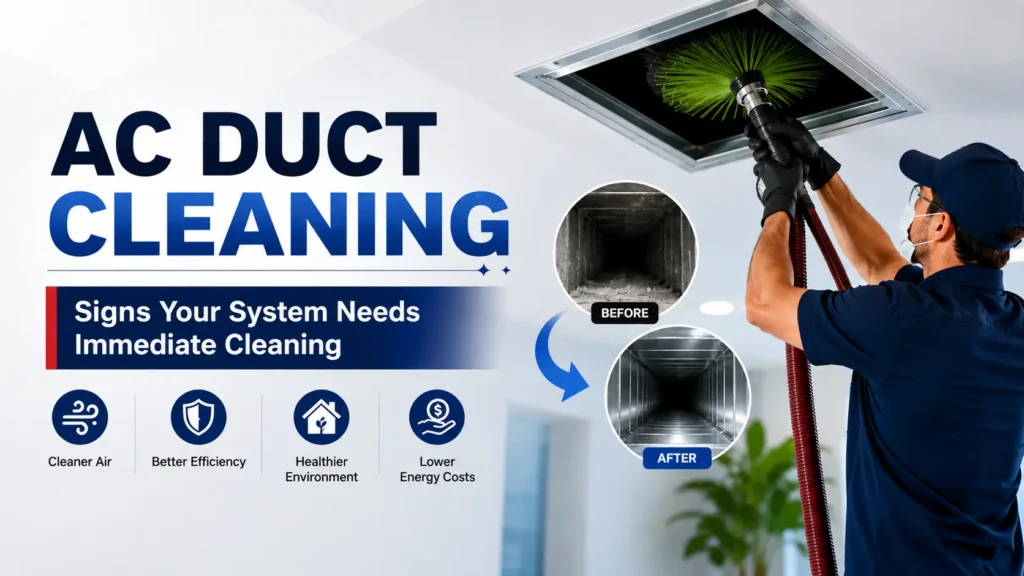
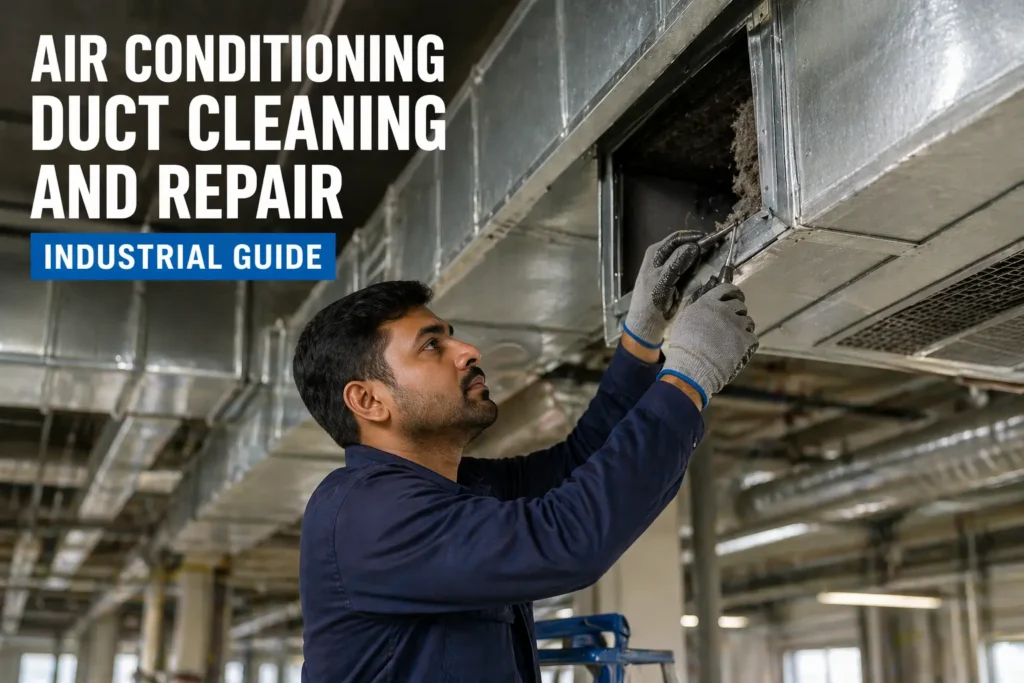
    Industrial duct cleaning is the professional removal of dust, grease, debris, mold, and microbial contamination from HVAC ductwork in commercial and industrial facilities. Duct repair refers to the sealing of air leaks, restoration of insulation, and structural fixes to damaged duct sections.

    Together, these services restore an HVAC system to its designed performance, improving airflow, reducing energy consumption, and ensuring clean air circulation throughout the facility.

    Why Industrial Duct Maintenance Matters

    Industrial HVAC systems run continuously under heavy load. Over time, contaminants build up inside ductwork, and the consequences are measurable:

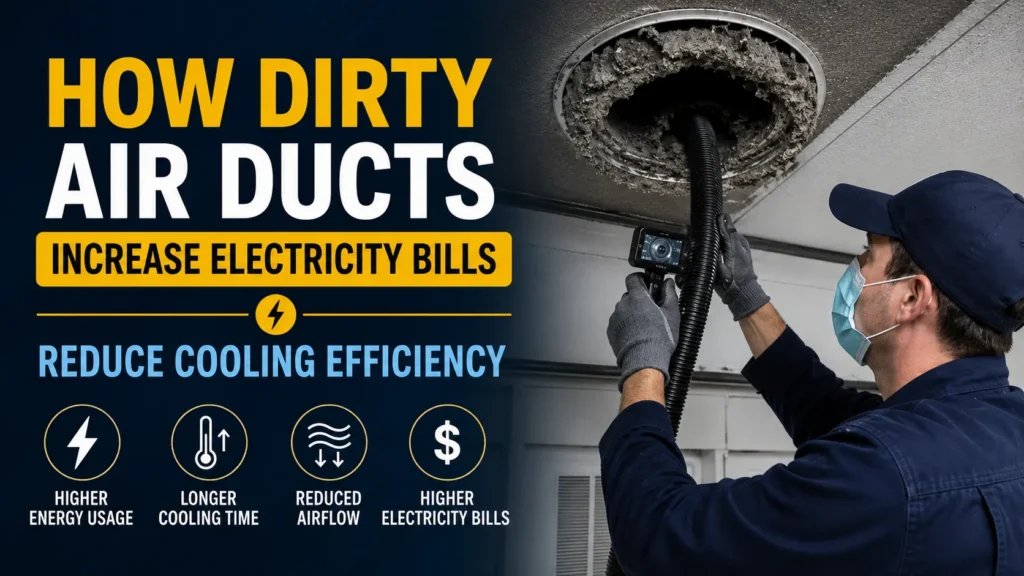
    Energy Loss: According to the U.S. Department of Energy, duct leakage alone accounts for 25–40% of HVAC energy loss in commercial and industrial systems. Contamination-related airflow restrictions push losses even higher.

    Air Quality Decline: Contaminated ducts recirculate dust, VOCs, mold spores, and industrial byproducts across work areas. This leads to respiratory issues, increased sick days, and in regulated sectors like pharmaceuticals or food processing, compliance failures.

    Equipment Degradation: When ducts are restricted or leaking, HVAC units compensate by running harder. This accelerates wear on compressors, fans, and motors, shortening equipment lifespan and increasing breakdown frequency.

    Regulatory Risk: Occupational health standards in many industries mandate acceptable indoor air quality. Dirty ductwork is a common and entirely avoidable source of non-compliance.

    Regular industrial duct cleaning and repair protects your people, your equipment, and your operating budget simultaneously.

    The Industrial Duct Cleaning Process: Step by Step

    Unlike residential cleaning, industrial duct cleaning follows a structured, multi-stage process designed for heavy contamination and large system volumes.

    Step 1 — Inspection and Assessment Technicians use camera systems and airflow measurement tools to map contamination levels, identify restrictions, and locate structural damage before any cleaning begins. This step determines the correct cleaning method for each duct section.

    Step 2 — System Isolation Duct sections are isolated to prevent loosened contaminants from spreading through the system during cleaning. In active facilities, isolation requires careful coordination to minimize production disruption.

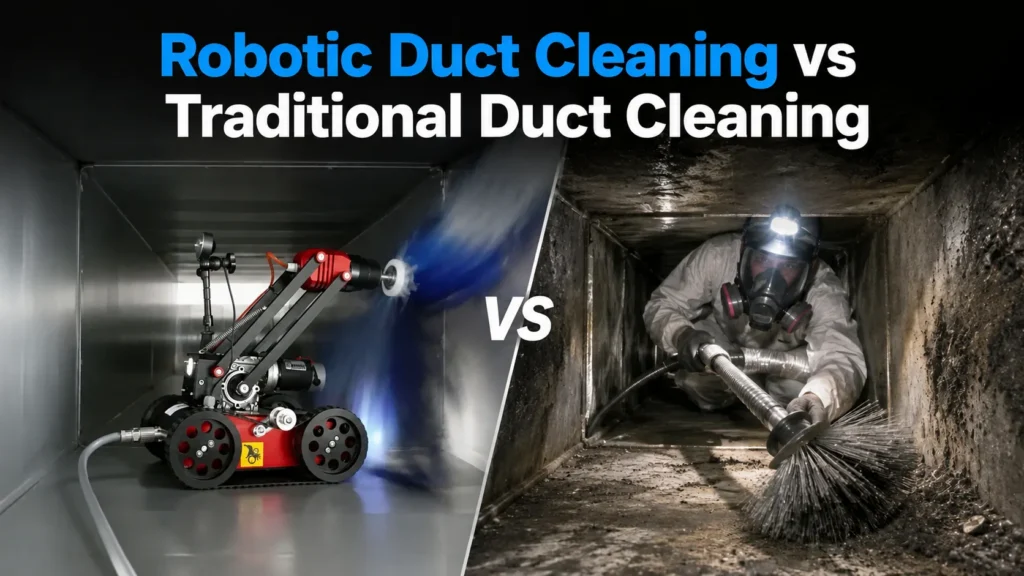
    Step 3 — Mechanical Agitation and Extraction High-powered rotary brushes, air whips, and pneumatic tools break up compacted debris, grease, and biofilm. Industrial-grade vacuum systems extract the loosened material simultaneously. Standard residential equipment cannot handle industrial contamination levels.

    Step 4 — Compressed Air Sweeping Compressed air systems clear fine particles from joints, corners, and transitions that mechanical tools cannot fully reach.

    Step 5 — Sanitization (Where Required) In food processing, healthcare, and maritime environments, antimicrobial treatments are applied after mechanical cleaning to eliminate bacteria and mold that can rapidly re-establish in humid duct conditions.

    Step 6 — Post-Cleaning Verification Airflow readings and efficiency metrics are documented before and after the service. Reputable providers deliver written performance data, not just verbal confirmation.

    Industrial Duct Repair Services

    Cleaning alone cannot address a duct system with structural problems. These are the most common industrial duct repair services:

    Air Leak Sealing Leaks at joints, seams, and connections are the primary cause of HVAC efficiency loss. Mastic sealant or metallic tape restores airtightness. The reduction in system load is often measurable immediately after sealing.

    Insulation Repair and Replacement Degraded insulation causes condensation, energy loss, and uneven temperature distribution. In humid environments, it also accelerates mold growth inside ductwork. Insulation replacement restores thermal performance and moisture control.

    Structural Duct Repair Corrosion, dents, collapsed sections, and failed joints require physical repair or section replacement. In marine environments, salt-air corrosion can cause sudden structural failure rather than gradual degradation, making early intervention especially important.

    Airflow Rebalancing System imbalance, where some zones receive excess airflow and others insufficient, can often be corrected through damper adjustments and register modifications without major hardware replacement.

    Benefits of Professional Duct Cleaning and Repair

    A properly maintained duct system delivers measurable improvements across multiple operational areas:

    • Energy savings of 15–20% are achievable in systems neglected for two or more years
    • Improved indoor air quality with fewer particulates, lower mold spore counts, and reduced VOC concentrations
    • Extended HVAC equipment lifespan through reduced operational strain
    • Fewer unplanned breakdowns and lower emergency maintenance costs
    • Regulatory compliance with occupational health and environmental standards

    For a mid-sized industrial facility running HVAC year-round, a 15% energy reduction represents significant annual savings, often recovering the cost of professional cleaning within one operating season.

    Maritime HVAC Duct Cleaning: A Special Case

    Ships and offshore facilities face conditions that accelerate every HVAC maintenance challenge. Salt air is aggressively corrosive. Humidity is persistent. Ventilation is constrained by the vessel’s structure. And crew members have no alternative air source, they breathe what the system delivers.

    In maritime environments, neglected ductwork creates genuine safety and habitability risks. Mold colonies can establish within weeks. Corroded duct sections can fail structurally. Contaminated air degrades crew health, alertness, and performance, with direct consequences for vessel safety.

    For maritime operators, a regular duct cleaning and repair schedule ensures:

    • Clean, breathable air in crew quarters and operational spaces
    • Prevention of corrosion-related failures before they require emergency intervention
    • Consistent cooling performance under continuous operating stress
    • Compliance with IMO and flag state occupational health requirements

    Marine duct maintenance is not a discretionary expense, it is a fundamental part of responsible vessel operation.

    How Often Should You Schedule Industrial Duct Cleaning?

    Maintenance frequency should match your operating environment:

    Facility TypeRecommended Interval
    Light industrial / commercialEvery 2–3 years
    Heavy manufacturing / food processingAnnually
    High-particulate environmentsEvery 6–12 months
    Marine and offshore operationsEvery 12–18 months

    Schedule an inspection sooner if you notice reduced airflow at supply vents, unexplained increases in energy bills, rapid dust accumulation near vents, unusual odors when the system runs, or a recent increase in HVAC service calls.

    Choosing an Industrial Duct Cleaning and Repair Provider

    Not all duct cleaning services are equipped for industrial work. When evaluating providers, look for:

    • Experience with your specific facility type (manufacturing, marine, food processing, etc.)
    • Industrial-grade equipment — rotary brushes, high-capacity extraction, camera inspection
    • Written pre- and post-cleaning performance reports
    • Relevant certifications (NADCA membership is the industry standard in North America)
    • Clear scope of work covering both cleaning and any identified repairs

    A provider who cannot document performance improvements before and after service is not delivering industrial-grade work.

    Conclusion

    Industrial HVAC ductwork is where system efficiency is won or lost. Contamination and structural damage develop gradually and quietly, but their impact on energy costs, air quality, and equipment reliability is continuous and compounding.

    A scheduled industrial duct cleaning and repair program costs a fraction of what reactive maintenance, emergency repairs, and wasted energy add up to over time. In maritime environments, it also directly protects the crew who depend on that air every day.

    If your ductwork hasn’t been professionally inspected in the past two years, that is where to start, not because something is visibly wrong, but because in most systems, something already is.

    Duct maintenance isn’t an expense. It’s the cost of running your systems the way they were designed to run.

  • Commercial HVAC Repair and Maintenance: Complete Service Guide

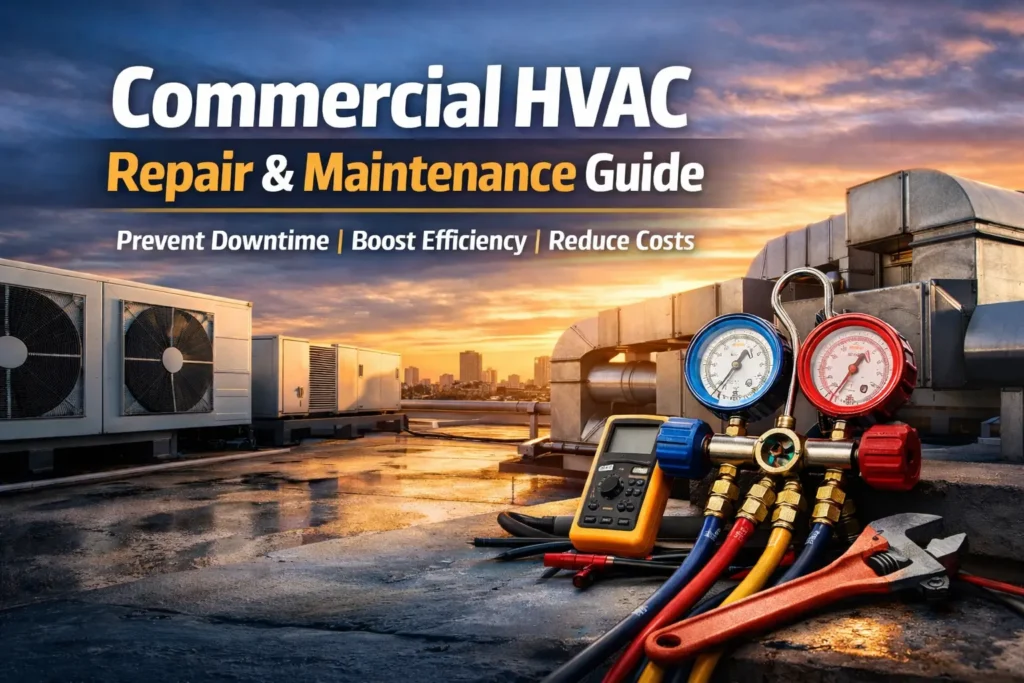
    Commercial HVAC Repair and Maintenance: Complete Service Guide

    A reliable HVAC system is the backbone of any commercial space. Whether it’s an office, retail store, warehouse, or industrial facility, consistent heating and cooling are essential for operations, employee comfort, and customer satisfaction. That’s where Commercial HVAC repair and maintenance plays a critical role.

    In this complete guide, we’ll break down everything you need to know about preventive maintenance, repair services, and system optimization, along with how you can reduce downtime and save costs.

    Why Commercial HVAC Systems Need Regular Maintenance

    Commercial HVAC systems are far more complex than residential units. They run for longer hours, manage larger spaces, and operate under continuous pressure. Because of this, even small inefficiencies can quickly turn into major problems.

    Without regular maintenance, systems tend to lose efficiency, consume more energy, and develop hidden issues that may lead to sudden breakdowns. Regular air conditioning repair and service ensures that the system performs consistently while avoiding unnecessary stress on components.

    Preventive Maintenance: The Key to Long-Term Efficiency

    Preventive maintenance focuses on identifying and resolving potential issues before they disrupt operations. Instead of waiting for a breakdown, businesses can ensure smooth functioning through routine servicing.

    This includes cleaning or replacing air filters, inspecting coils and ducts, checking refrigerant levels, testing electrical components, and calibrating thermostats. Each of these steps contributes to maintaining system balance and efficiency.

    With proper preventive maintenance, HVAC systems operate more efficiently, deliver better air quality, and experience less wear and tear. Over time, this significantly extends the system’s lifespan.

    Companies like Pioneer Marine help businesses implement structured maintenance plans that keep systems running at peak performance.

    Repair Services: Fixing Issues Before They Escalate

    Even with regular maintenance, occasional issues are inevitable. However, addressing them early is crucial to avoid larger failures. Professional Commercial HVAC repair and maintenance services help identify the root cause of problems and fix them efficiently.

    Common issues include uneven temperature distribution, unusual noises, increased energy usage, or malfunctioning components like compressors and fans. These signs should never be ignored, as they often indicate underlying problems.

    Timely air conditioning repair and service prevents minor faults from turning into expensive repairs. It also ensures that the system continues to operate without affecting business productivity or comfort levels.

    System Optimization: Maximizing Performance

    System optimization goes beyond basic maintenance and repairs. It involves improving the overall efficiency and functionality of the HVAC system.

    This can include upgrading outdated parts, installing smart thermostats, balancing airflow across different zones, and sealing ducts to prevent energy loss. Optimization also involves monitoring energy usage to identify inefficiencies and make necessary adjustments.

    When a system is properly optimized, it consumes less energy while delivering better cooling and heating performance. This not only reduces operational costs but also improves system reliability.

    Downtime Prevention: Keep Your Business Running

    Unexpected HVAC failures can disrupt daily operations and lead to financial losses. For businesses that rely heavily on climate control, even a short downtime can create significant challenges.

    Preventing downtime requires a proactive approach. Regular inspections, continuous performance monitoring, and immediate attention to minor issues help maintain system stability. Having a reliable maintenance partner ensures that potential problems are addressed before they impact operations.

    Consistent Commercial HVAC repair and maintenance allows businesses to operate smoothly without worrying about sudden system failures.

    Cost Savings: Maintenance vs. Replacement

    Many businesses underestimate the cost-saving potential of regular maintenance. Delaying service may seem like a short-term saving, but it often results in higher expenses later.

    A well-maintained system operates efficiently, which reduces energy consumption and lowers utility bills. Early detection of issues also minimizes repair costs and prevents expensive emergency breakdowns.

    Additionally, regular servicing extends the life of the HVAC system, delaying the need for replacement. This makes maintenance a far more cost-effective strategy compared to reactive repairs.

    Creating an Effective Maintenance Schedule

    A proper maintenance schedule ensures consistency and reliability.

    Recommended Maintenance Timeline:

    • Monthly: Check filters and basic system performance
    • Quarterly: Inspect components and clean coils
    • Bi-Annually: Comprehensive servicing and testing
    • Annually: Full system inspection and optimization

    Partnering with experts like Pioneer Marine can help you create a customized schedule based on your system and usage.

    Choosing the Right HVAC Service Provider

    Not all service providers deliver the same level of quality. Choosing the right partner is crucial.

    What to Look For:

    • Experience in commercial HVAC systems
    • Certified technicians
    • Fast response time
    • Preventive maintenance plans
    • Transparent pricing

    A reliable provider ensures that your air conditioning repair and service needs are handled efficiently and professionally.

    Conclusion

    Investing in Commercial HVAC repair and maintenance is not just about fixing problems, it’s about preventing them and improving overall system performance.

    With the right approach, businesses can reduce downtime, save costs, and ensure a comfortable environment for employees and customers. From preventive maintenance to system optimization, every step contributes to long-term efficiency.

    Partnering with an experienced provider like Pioneer Marine ensures that your HVAC system remains reliable, efficient, and ready to support your business operations at all times.

  • Why Marine HVAC Systems Need Specialized Technicians

    Why Marine HVAC Systems Need Specialized Technicians

    Operating a vessel is nothing like managing a building on land. Every system onboard must function reliably under constant motion, high humidity, and continuous exposure to saltwater. Among these systems, HVAC plays a critical role, not just for comfort, but for safety, equipment performance, and overall operational efficiency.

    However, one of the most common mistakes vessel owners make is assuming that any HVAC technician can handle marine systems. In reality, marine HVAC systems are highly specialized, and treating them like standard air conditioning units often leads to inefficiencies, frequent breakdowns, and expensive repairs.

    Marine HVAC Systems Are Fundamentally Different

    Marine HVAC systems are not simply smaller versions of land-based systems, they are engineered specifically for the marine environment. Every component, from compressors to condensers, is designed to function under conditions that would quickly damage standard HVAC setups.

    Unlike buildings, vessels are constantly in motion. This movement creates vibration that affects system stability and performance. Additionally, space constraints onboard ships and yachts require compact and highly efficient system designs. Technicians must understand how to work within these tight spaces without compromising system functionality.

    Another major difference is the use of seawater-cooled systems, which are rarely seen in residential or commercial HVAC setups. Handling such systems requires a deep understanding of marine engineering principles, something general technicians typically lack.

    The Impact of Saltwater and Corrosion

    Saltwater is one of the most aggressive elements any mechanical system can face. Over time, it can corrode metals, damage electrical components, and reduce the efficiency of HVAC units.

    In marine environments, corrosion is not a possibility, it is inevitable. The real challenge lies in managing and minimizing its effects. Specialized technicians are trained to identify early signs of corrosion and apply preventive measures such as protective coatings, proper material selection, and routine maintenance.

    Without this expertise, small corrosion issues can quickly escalate into major system failures, leading to costly downtime and repairs. This is why relying on general HVAC knowledge in a marine setting can be risky.

    Compliance and Safety Are Critical

    Marine HVAC systems must adhere to strict safety and regulatory standards. These standards are not optional, they are essential for ensuring the safe operation of the vessel.

    Technicians working on marine systems must be familiar with international maritime regulations, environmental guidelines, and safety protocols. Even a minor mistake in installation or servicing can result in failed inspections or operational delays.

    Specialized professionals, such as those at Pioneer Marine, are trained to work within these regulatory frameworks. Their expertise ensures that systems are not only functional but also fully compliant with industry standards.

    Complex Integration with Other Vessel Systems

    Marine HVAC systems are not standalone, they are integrated with other ship systems such as:

    • Power generation
    • Engine room ventilation
    • Automation systems

    This integration requires:

    • Knowledge of marine electrical systems
    • Control panel synchronization
    • Load balancing

    A general HVAC technician may not be trained in:

    • Marine automation systems
    • Shipboard electrical safety

    Marine HVAC experts ensure seamless integration without disrupting other critical systems.

    Working Within Limited Space

    Space is a luxury that vessels simply do not have. Every piece of equipment must be carefully positioned to maximize efficiency while allowing access for maintenance.

    Installing or repairing HVAC systems in such confined environments requires precision, planning, and experience. A poorly installed component can make future maintenance difficult or even impossible, leading to higher long-term costs.

    Experienced marine technicians know how to navigate these constraints, ensuring that systems are both efficient and serviceable.

    The High Cost of Failure at Sea

    On land, an HVAC failure might cause discomfort. At sea, the consequences can be far more serious.

    Temperature control is essential for crew well-being, equipment performance, and, in some cases, cargo safety. A malfunctioning HVAC system can lead to overheating, equipment damage, or unsafe working conditions.

    Because of these high stakes, marine HVAC systems must be maintained to the highest standards. Specialized technicians are trained to anticipate potential issues and respond quickly to prevent system failures.

    The Role of Advanced Maintenance and Diagnostics

    Marine HVAC systems require:

    • Predictive maintenance
    • Advanced diagnostics
    • Regular performance monitoring

    Specialized technicians use:

    • Marine-grade diagnostic tools
    • Performance analytics
    • Preventive maintenance strategies

    This helps:

    • Extend system lifespan
    • Reduce repair costs
    • Improve efficiency

    Why Pioneer Marine Is the Right Choice

    Choosing the right service provider is just as important as maintaining the system itself. Pioneer Marine brings a deep understanding of marine HVAC systems, combined with practical experience in handling real-world challenges.

    Our team focuses on delivering solutions that are not only effective but also tailored to the unique needs of each vessel. From installation to maintenance and emergency support, we ensure that your HVAC system performs reliably under all conditions.

    Conclusion

    Marine HVAC systems are far more complex than their land-based counterparts. From corrosion resistance to regulatory compliance and system integration, every aspect requires specialized knowledge.

    Relying on general technicians can lead to inefficiencies, costly repairs, and serious operational risks.

    Choosing specialized experts like Pioneer Marine ensures your HVAC system performs reliably in the toughest marine conditions.